Office of Research
Clinical Trials

Leading the Future of Clinical Medicine
The College of Medicine is a hub for groundbreaking clinical research. With over 30 specialized research units, our teams are dedicated to translating laboratory discoveries into life-saving clinical applications. From neurology to oncology, we provide the infrastructure and expertise necessary to push the boundaries of modern medicine.

Browse our Research Units below to view current study listings.

Clinical Trials Search

Justin Virojanapa, DO

Justin Virojanapa, DO

Functional | Spine

Brain and spine imaging before and after neck surgery for instability

This research study is looking at how advanced MRI scans can show changes in the brainstem and upper spine in people with craniocervical instability or a condition called basilar invagination. Participants will have MRI scans before surgery and again after surgery as part of their regular care, with one additional special scan. Researchers will compare these images to see how the spine and brainstem change after treatment and whether these changes relate to symptoms and recovery. The goal is to improve how doctors measure treatment success and better understand which patients may benefit from surgery.

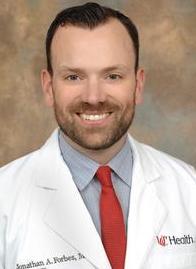
Jonathan Forbes, MD

Jonathan Forbes, MD

Brain Tumor | General | Vascular

New Surgical Tool for Brain and Skull Base Surgery

This research is studying a surgical tool called DuraStat that is used to help close the protective lining around the brain during certain skull base surgeries done through the nose. Sometimes this lining is opened during surgery and needs to be carefully repaired to prevent fluid leaks or infection. The study will follow adults who are already having this type of surgery and need a repair during the procedure. Doctors will look at how well the repair works and how patients heal over time. Follow-up visits are part of normal surgical care, and participation does not require extra procedures beyond standard treatment.

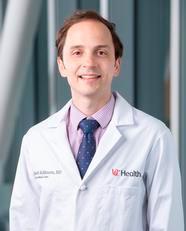
David Robinson, MD, MS

David Robinson, MD, MS

Acute | Neurotrauma | Neuro-critical care | General

Evaluating brain injury from subdural hematomas using advanced imaging

We hope to conduct advanced MRIs on patients. We think these MRIs will help better understand how subdural hematomas injure the brain and keep people from fully recovering once the blood goes away.

Laura Ngwenya, MD, PhD

Laura Ngwenya, MD, PhD

Neurotrauma

Phase 2

APT Acute TBI Adaptive Multi-Arm Phase 2 Platform Trial

This is a randomized, parallel, multi-arm, multi-stage adaptive Phase 2 platform trial testing whether repurposed FDA-approved drugs given off-label soon after injury can improve recovery after acute non-penetrating traumatic brain injury (TBI). Adults 18-65 who present within 24 hours of injury with a Glasgow Coma Scale (GCS) 9-15, CT evidence of intracranial trauma (CT+), and an elevated GFAP blood level (>100 pg/mL) are eligible. Participants are randomized to one of the investigational drug arms or placebo. Investigational agents vary by arm and are selected for potential neuroprotective and anti-inflammatory effects to reduce secondary injury. Participants undergo serial clinical assessments, blood biomarker sampling (including GFAP and NfL), cognitive testing, and MRI (including DTI). The primary efficacy outcome compares change in the Glasgow Outcome Scale-Extended (GOSE) between Week 2 and Month 3. Secondary outcomes include biomarker trajectories, DTI measures, cognitive performance, and post-concussive symptom scales. Follow-up visits occur through Month 6 with approximately six in-person visits plus interim phone assessments and scheduled imaging/blood draws. Safety monitoring excludes participants with significant comorbidities, pregnancy, known contraindications to study drugs, or abnormal renal/hepatic function, among other criteria. The trial uses an adaptive platform design allowing multiple investigational arms to be evaluated sequentially or concurrently against placebo.

Ishita Basu, PhD

Ishita Basu, PhD

Functional

Studying brain signals and thinking

This study measures brain signals while people perform computer-based thinking and memory tasks. Some participants also receive gentle electrical stimulation to see how it affects brain activity.

Ishita Basu, PhD

Ishita Basu, PhD

Functional

Early Neuromodulation TBI Recovery

This study tests whether a short, noninvasive brain stimulation given early after a moderate to severe traumatic brain injury (TBI) helps thinking and memory as the brain heals. The study will enroll about 60 adults who had an isolated moderate or severe TBI. At the first (acute) visit while still in the hospital, participants complete a short thinking test and two computer tasks while their brain waves are recorded with EEG. Half will be randomly chosen to get 15 minutes of active anodal transcranial electrical stimulation (A-tES) to the left front part of the brain while doing the tasks; the other half will get a sham (placebo) stimulation. Everyone is followed for 6 months. At about 3 months they return for testing and all receive active A-tES during tasks. At 6 months they do testing with EEG but no stimulation. The study aims to (1) find brainwave patterns that track recovery from acute to chronic stages of TBI and (2) test whether giving A-tES early improves task performance, cognitive test scores, and quality of life at 6 months compared with giving stimulation only at 3 months. The study uses a randomized, double-blind, sham-controlled design for the early stimulation comparison.

Laura Ngwenya, MD, PhD

Laura Ngwenya, MD, PhD

Functional | General

Testing a flushing device to help prevent brain shunt failure

This research study is looking at whether a small flushing device, added during brain shunt surgery, can help prevent the shunt from becoming blocked. Adults with a condition called idiopathic intracranial hypertension, which causes high pressure around the brain, may need a shunt to drain fluid. Blockages are common and often require more surgery. Participants will be taught how to gently press the device under the skin to flush the shunt at home and will be followed during routine clinic visits to see how well it works and if it is safe.

Jed Hartings, PhD

Jed Hartings, PhD

Neurotrauma

INDICT

The goal of acute TBI treatment is to minimize secondary damage that evolves over hours to days after the primary injury. Until now, however, there have been no methods for monitoring heterogeneous pathologic mechanisms to identify patients for appropriate neuroprotection therapies. Using invasive monitoring, investigators have documented that spreading depolarizations (SD), a cytotoxic dysfunction of cerebral gray matter that has been well-characterized through 60 years of research in animal models, are the dominant pathophysiologic process in peri-lesion cortex of many, but not all, severe TBI patients. Furthermore, it was found that the occurrence of SD as a secondary injury process in patients is an independent predictor of worse neurologic outcomes. Thus, monitoring of SD as a heterogeneous mechanism in TBI may allow selective use of therapy in only those patients who might benefit. Here the investigators will conduct a randomized Phase 2 feasibility trial that uses real-time SD monitoring to guide implementation of a tier-based protocol of intensive care therapies aimed at SD suppression. The study is based on the hypothesis that outcomes from severe TBI can be improved by targeting intensive care therapies to suppress the pathology of SDs as a brain marker and mechanism of secondary injury. The objective of this study is to test the feasibility of this approach to intensive care management of severe TBI in a Phase 2 trial that uses real-time SD monitoring to guide administration of prescribed therapies to suppress SD. The aims are to (1) determine the feasibility of real-time SD monitoring to guide intensive care management of severe TBI, and (2) determine the effect of SD-guided vs. standard care management to reduce secondary brain insults in severe TBI. This is a randomized Phase 2 clinical trial enrolling approximately 72 patients at 3 sites. Patients requiring neurological surgery for emergency treatment of TBI will be enrolled. The need for surgery allows for the placement of an electrode strip on the brain during surgery for subsequent electrocorticography (ECoG). ECoG data will be monitored continuously in real-time for the occurrence of SDs during intensive care. When SDs are observed, these patients (~60%, or n=43) will be randomized 1:1 to either standard (control) or SD-guided care. In the standard care arm, treatment will follow local and national guidelines with blinding to further ECoG results. In the SD-guided arm, treatment will follow a tiered-based protocol with escalation and de-escalation based on efficacy to suppress further SD pathology. Treatments will include use of ketamine sedation and adjusted targets for plasma glucose, cerebral perfusion pressure, temperature, and end-tidal CO2. As outcomes, the accuracy of real-time SD scoring and compliance with protocol tier assignment and therapy implementation will be assessed. The burden of SD pathology, other measures of cerebral physiology (intracranial and cerebral perfusion pressures, and brain oxygenation), and medical complications will also be compared between the two study arms.

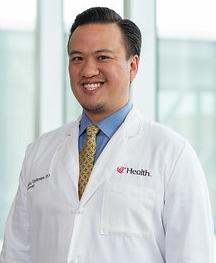
Laura Ngwenya, MD, PhD

Laura Ngwenya, MD, PhD

Neurotrauma | TBI/Concussion

Blood Test for Traumatic Brain Injury

This study will enroll adults who come to the emergency department after a head injury and have a head CT scan as part of their care. The research has two parts: one aims to develop a blood test that helps diagnose TBI and predict recovery, and the other follows hospitalized patients to see if blood markers can detect new or worsening brain problems while in hospital. Participants will have blood samples taken early after injury and be followed with clinical checks, imaging done for care (CT or MRI), and outcome assessments at about 2, 14, 28, and 90 days. The study will compare blood marker results with imaging, clinical judgment, and standard outcome scales to find whether the blood test can accurately identify injury, predict recovery, and spot secondary events.

Charles Prestigiacomo, MD

Charles Prestigiacomo, MD

Neurotrauma | Vascular

Phase 2

PPF Block for Post SAH Headache

This is a phase II, randomized, double‑blind trial testing whether a bilateral pterygopalatine fossa (PPF) injection can reduce opioid use for acute headache after an aneurysmal subarachnoid hemorrhage (SAH). Participants who are adults hospitalized soon after a spontaneous SAH and who need strong opioid pain medicine are randomized to receive either an active PPF block (ropivacaine plus dexamethasone) or a saline injection as a placebo. The study compares opioid use in the 24 hours after each injection across a 48‑hour double‑blind period. Safety is monitored with imaging to check for radiographic vasospasm at 48 hours, and tolerability is measured by whether participants accept a second injection at 24 hours. The trial also measures intracranial artery flow with transcranial Doppler around the time of the injections to watch for changes. The goal is to find a safer, opioid‑sparing way to treat severe headache after SAH without increasing the risk of vasospasm.

Laura Ngwenya, MD, PhD

Laura Ngwenya, MD, PhD

Neurotrauma

Phase 2

TRACK TBI Precision Medicine Part 3

This is a randomized phase 2 trial testing an FDA approved drug given off label to adults with moderate to severe traumatic brain injury (TBI). Participants who are treated within 24 hours of injury are randomly assigned to receive the study drug or a placebo. The main goal is to see if the drug improves short term functional outcome measured at 4 weeks. The study also looks at blood markers of brain injury, standardized tests of consciousness, brain MRI measures, longer term function and cognition, quality of life, and caregiver burden up to six months after injury. Enrollment is by invitation and a legally authorized representative provides consent when the patient cannot. Participants must be able to undergo MRI and meet study blood test criteria. Certain medical conditions such as severe other injuries, kidney or liver disease, active infections, pregnancy, or inability to follow up will disqualify a person from participation.