Office of Research
Clinical Trials

Leading the Future of Clinical Medicine
The College of Medicine is a hub for groundbreaking clinical research. With over 30 specialized research units, our teams are dedicated to translating laboratory discoveries into life-saving clinical applications. From neurology to oncology, we provide the infrastructure and expertise necessary to push the boundaries of modern medicine.

Browse our Research Units below to view current study listings.

Clinical Trials Search

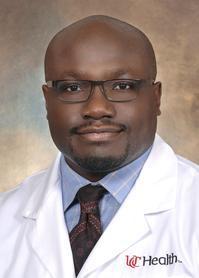
Lauren E. Menzies, MD

Lauren E. Menzies, MD

Subacute

Phase 3

Cilostazol Prevent Recurrent Stroke

This is a phase 3, randomized trial testing whether adding the medicine cilostazol to a person's current antiplatelet drug (either aspirin or clopidogrel) helps prevent another stroke, heart attack, or death from blood vessel disease. People who had a stroke or mini‑stroke (TIA) in the past 180 days and who are taking one antiplatelet drug may join. Participants will be followed for up to 4 years to see how long it takes for major events (stroke, heart attack, or vascular death) to occur. The study will also track time to ischemic stroke and the time to any major bleeding events. People with a recent spontaneous brain bleed, significant heart failure, or a life expectancy under 6 months are not eligible. The trial is not yet recruiting.
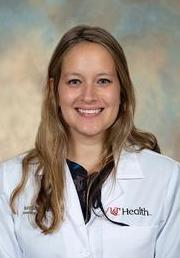

Stacie Demel, DO, PhD

Stacie Demel, DO, PhD

Subacute

Stroke Cognitive Recovery Study

This is a large, observational study that will enroll about 8,000 people who are hospitalized with a recent stroke and who do not have known dementia. The study looks at how thinking and memory change after stroke and what factors influence recovery. All participants complete a baseline check, blood sample, and short thinking and daily function tests. They have follow up visits in person at about 3 to 6 months and 18 months, and yearly phone check ups up to four years. Some participants join extra tiers that include brain MRI scans and more detailed thinking tests and blood draws. A smaller group gets special PET scans that look for proteins linked to dementia. The study follows people over time to learn which stroke features, imaging findings, blood markers, and other risks lead to more or less cognitive decline.

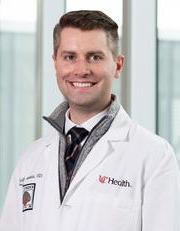
Matthew Flaherty, MD

Matthew Flaherty, MD

Subacute

Phase 3

LIBREXIA: Milvexian for Stroke Prevention

This is a Phase 3, randomized, double-blind study testing whether milvexian, an oral medicine that blocks Factor XIa, can prevent repeat ischemic strokes in people who recently had an acute ischemic stroke or a high-risk transient ischemic attack (TIA). Adults who meet the entry rules and can start treatment within 48 hours of their event are randomly assigned to take milvexian or a matching placebo while continuing standard antiplatelet care. The main measure is time until the first new ischemic stroke, tracked for up to about 41 months. The study also looks at broader cardiovascular outcomes and safety, especially bleeding and liver effects. The goal is to see if milvexian reduces recurrent strokes without causing unacceptable side effects.

Wole Awosika, MD

Wole Awosika, MD

Acute | Subacute

Post Stroke Sensory Reweighting

This is a small observational study that follows people who had an ischemic stroke to understand how their brain and body adjust the way they use sensory information for balance and walking (called sensory reweighting). Participants are approached in the hospital and enrolled within 14 days of the stroke, and return for testing at about 2, 4, and 6 months after the stroke. At each visit the team measures leg strength and function, balance, walking speed, and records any falls. Participants also have brain imaging at the 6 month visit to look for structural patterns linked to changes in balance and walking. The goal is to find early, measurable signs and brain features that explain why some people recover better than others and to help design more precise rehabilitation and brain stimulation targets.

Wole Awosika, MD

Wole Awosika, MD

Subacute

Phase 3

Home Telerehab After Stroke

This study tests whether adding a home telerehabilitation program to usual post-stroke care improves arm movement and overall ability after a stroke. People who had a stroke about 4 months earlier and have moderate weakness in one arm are randomly placed into one of two groups: (1) telerehabilitation plus usual care, or (2) usual care alone. The telerehab program includes 36 remote training sessions made of exercises, interactive games, and stroke education that total 70 minutes per day, six days a week, for about 6 weeks. Participants stay in the study for about 8 months and come to four in-person visits for arm tests and one brain MRI. The main goal is to see if arm function improves more at 2 months in the telerehab group, and a secondary goal is to see if overall disability is reduced. People in the usual care group are offered the telerehab program after the study ends.

Wole Awosika, MD

Wole Awosika, MD

Acute

Early Stroke Recovery Biomarkers

This study will test whether simple, early medical tests can predict how well a person's arm recovers after an ischemic stroke. Many people have lasting arm weakness after a stroke. Doctors want reliable markers to tell which patients will do well and which will not. VERIFY will enroll people shortly after an ischemic stroke and collect three types of information: clinical exams of arm strength and function, brain stimulation tests (TMS) that check motor pathways, and MRI brain scans that measure injury to the main motor pathway. The study will follow participants for 90 days and measure arm impairment, arm function, and how much the arm is used in daily life. The goals are to validate that TMS and MRI measures taken early predict 90-day arm outcomes and to test a prediction tool called PREP2 in many centers. About 650 participants across up to 45 sites are planned. The results aim to help select the right patients for future recovery trials and to guide early rehabilitation decisions.

Stacie Demel, DO, PhD

Stacie Demel, DO, PhD

Subacute

Endovascular Treatment in Disabled Stroke

This is a prospective, observational study at multiple stroke centers to compare two commonly used care approaches for people who had moderate-to-severe disability before getting a large-vessel ischemic stroke. One approach is standard medical care (medications, blood pressure and cholesterol control, rehab and other supportive measures) and the other adds endovascular thrombectomy (mechanical removal of the clot). The study will enroll adults with pre-stroke disability (moderate to severe) who arrive within 24 hours of stroke symptoms and have a large artery blockage on brain imaging. The main goal is to compare how patients do at about 90 days after treatment-measuring functional outcome, return to prior level, quality of life, and safety (including death and bleeding in the brain). Results aim to guide care decisions for stroke patients who already had disabilities before their stroke.

Yasmin N. Aziz, MD

Yasmin N. Aziz, MD

Subacute

CAPTIVA MRI Biomarker Study

This is an observational MRI study done alongside the CAPTIVA clinical trial. People already enrolled in CAPTIVA who had a recent non-disabling stroke from severe narrowing (70-99%) of an intracranial artery can join. Participants get a detailed MRI scan within 14 days of CAPTIVA enrollment to look at artery plaque and blood flow. The study will follow participants for about 12 months to see if MRI features can help predict who will have another ischemic stroke in the same artery despite medical therapy. The goal is to find imaging markers that could guide future trials and improve care for patients with intracranial artery narrowing.

Stacie Demel, DO, PhD

Stacie Demel, DO, PhD

Acute

StrokeNet Thrombectomy Platform

STEP is a large, multi-center study testing ways to improve care for people who have an acute ischemic stroke caused by a blockage in a large or medium brain artery. The trial runs at many stroke centers and is set up so new treatments can be added over time. It studies several types of approaches: broadening who might get endovascular thrombectomy (a clot-removal procedure), testing new devices used during clot removal, testing medicines given along with the procedure, and testing early or pre-hospital tools and systems to speed care. People are randomly assigned to treatments so researchers can compare results. The main goal is to see which options help people have less disability 90 days after their stroke, while watching for harms like bleeding or death. The study adapts as results come in, so it can stop or expand parts that look better or worse.

Robert Stanton, MD

Robert Stanton, MD

Subacute

Apixaban versus Aspirin After ICH

This is a Phase 3, randomized, double-blind study that compares the blood thinner apixaban to aspirin in people who had a recent brain bleed (intracerebral hemorrhage) and also have atrial fibrillation. The study will enroll about 700 people and follow each person for at least 12 months and up to 36 months. The main question is whether apixaban lowers the chance of any stroke (either a new bleed or a clot-related stroke) or death from any cause compared with aspirin. The study also looks at whether people do better in recovery and daily function. Patients are enrolled 14 to 180 days after their brain bleed. The trial is taking place at multiple sites coordinated through a stroke research network.

Robert Stanton, MD

Robert Stanton, MD

Subacute

Anticoagulation in ICH Survivors

The Anticoagulation in Intracerebral Hemorrhage Survivors for Stroke and recovery study is a randomized, double-blinded, phase III clinical trial designed to test the efficacy and safety of anticoagulation, compared with aspirin, in patients with a recent ICH and high risk non valvular AF. A total of 700 patients, age 18 or older with a first ever ICH 14-120 days before entry will be randomized in a 1:1 ratio to receive apixaban ( 5 mg tablet twice daily or 2.5 mg tablets twice daily for patients meeting standard dose adjustment requirements) or aspirin (81 mg tablet once daily).

Stacie Demel, DO, PhD

Stacie Demel, DO, PhD

Subacute

DECADE-Brain Health study

Intracerebral hemorrhage (ICH) is the most extreme subtype along the spectrum of CSVD that includes white matter hyperintensity (WMH), small vessel (lacunar) ischemic stroke and vascular cognitive impairment. We propose to re-enroll 400 (275 non-Hispanic European descent and 125 African-descent) participants of i3C DECADE study, (MPI: Bazzano, Urbina and Carmichael) which is following biracial cohorts in the Cincinnati, Ohio regions originally recruited as children in the 1970s and 1980s, for a 3-year (+/- 6 months) follow-up MRI, additional serial cognitive examinations and detailed dietary histories which will include a polyamine specific history and serial blood sampling. The proposal will copy the i3C DECADE exam including an identical MRI protocol and use the same recruitment and retention tools.