
Office of Research
Clinical Trials

Leading the Future of Clinical Medicine
The College of Medicine is a hub for groundbreaking clinical research. With over 30 specialized research units, our teams are dedicated to translating laboratory discoveries into life-saving clinical applications. From neurology to oncology, we provide the infrastructure and expertise necessary to push the boundaries of modern medicine.

Browse our Research Units below to view current study listings.

Clinical Trials Search

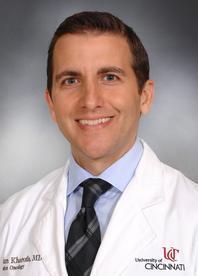
Jordan Kharofa, MD

Jordan Kharofa, MD

Gastrointestinal Cancer

Comparing Proton Therapy to Photon Radiation Therapy for Esophageal Cancer

This is a randomized trial for patients diagnosed with Esophageal Cancer comparing Proton Beam Therapy and Intensity Modified Photon Radiotherapy. Patients randomized to Arm 1 will undergo Proton Beam therapy with concurrent weekly chemo with paclitaxel/carboplatin. Patients in Arm 2 will undergo IMRT with concurrent paclitaxel/carboplatin. The primary endpoint of this study is Overall Survival.

This study may be appropriate for those with: Newly Diagnosed Cancer

Jordan Kharofa, MD

Jordan Kharofa, MD

Head and Neck Cancer

Phase 1

Phase I/​ II Trial Combining PD-1 Inhibition and Neoadjuvant Proton or Photon Radiation Therapy in Head and Neck Cancer

This study tests a short course of radiation (either standard X-ray photon radiation or proton radiation) given before surgery together with the immunotherapy drug pembrolizumab for people with recurrent head and neck squamous cell carcinoma. Phase I will enroll small groups to find a safe radiation dose and make sure combining the treatments before surgery is tolerable. Phase II will randomly assign patients to receive either proton or photon radiation plus pembrolizumab before salvage surgery and compare the rate of major pathologic response (very low remaining tumor on the removed tissue) to historical results. About 40 patients will be screened and randomized. Key goals are safety, whether the combination increases major pathologic response, and longer-term outcomes like disease-free and overall survival. The study includes tissue and immune testing to learn how the treatments affect the tumor and microenvironment.

This study may be appropriate for those with: Recurrent Cancer