
Office of Research
Clinical Trials

Leading the Future of Clinical Medicine
The College of Medicine is a hub for groundbreaking clinical research. With over 30 specialized research units, our teams are dedicated to translating laboratory discoveries into life-saving clinical applications. From neurology to oncology, we provide the infrastructure and expertise necessary to push the boundaries of modern medicine.

Browse our Research Units below to view current study listings.

Clinical Trials Search

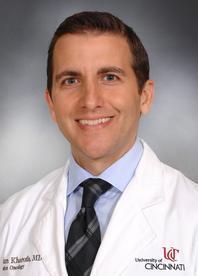
Jordan Kharofa, MD

Jordan Kharofa, MD

Gastrointestinal Cancer

Comparing Proton Therapy to Photon Radiation Therapy for Esophageal Cancer

This is a randomized trial for patients diagnosed with Esophageal Cancer comparing Proton Beam Therapy and Intensity Modified Photon Radiotherapy. Patients randomized to Arm 1 will undergo Proton Beam therapy with concurrent weekly chemo with paclitaxel/carboplatin. Patients in Arm 2 will undergo IMRT with concurrent paclitaxel/carboplatin. The primary endpoint of this study is Overall Survival.

This study may be appropriate for those with: Newly Diagnosed Cancer
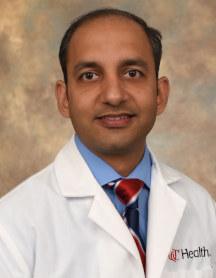
Davendra Sohal, MD, MPH

Davendra Sohal, MD, MPH

Gastrointestinal Cancer

Phase 1

DISP 10 Advanced GI Cancer Study

This is an early phase (Phase 1) study testing DISP 10, a combination of an engineered adenovirus (DV-10) and a CAR T cell therapy (idecabtagene vicleucel or ide‑cel). Adults with advanced or metastatic cancers of the esophagus, gastroesophageal junction, stomach, or colon who have measurable disease and at least one site for biopsy may join. The study has two parts: Part 1 slowly increases doses to find a recommended dose for expansion, focusing on safety and dose‑limiting toxicities. Part 2 treats more participants at that dose to learn about safety and whether tumors shrink or stabilize. Main goals are to record side effects, establish a safe dose, and measure tumor response. Participants must have good organ function and no major infections, recent transplants, or prior similar viral or CAR T therapies. Follow up includes frequent checks after treatment and ongoing monitoring for up to 2 years, with long term survival follow up possible up to 15 years.

This study may be appropriate for those with: Metastatic Cancer